How to Learn Stonemasonry: A Complete Guide to Starting Your Career
Ever walked past a medieval cathedral or a beautifully restored Georgian façade and wondered who keeps these treasures standing? Stonemasons do and it’s a craft that’s very much alive today. ~
Whether you’re a school leaver looking for a hands-on career, someone considering a trade change, or simply curious about working with your hands, learning stonemasonry offers something rare: the chance to create work that outlasts you.
The good news? There are several routes into the trade, and you don’t need a shelf full of GCSEs to get started. Let’s break down how you can become a stonemason, step by step.
Why Learn Stonemasonry?
Stonemasonry isn’t just a job, it’s a craft where you can see tangible results. One day you’re carving an ornate capital in the workshop; the next, you’re on-site at a Grade I listed building, fitting stonework that’ll be there for centuries.
The UK has a shortage of skilled stonemasons, which means there’s solid job security in the industry. Salaries start around £20,000 while you’re training, rising to £30,000-£35,000 with experience.
Self-employed masons can earn even more, especially in areas like heritage conservation or memorial masonry.
Fair warning: it’s physical work, often outdoors, and precision matters. But if you like the idea of combining craftsmanship, problem-solving, and a bit of history, it’s hard to beat. From cathedral restoration to new builds, the opportunities in stonemasonry are vast.
Understanding the Different Types of Stonemasonry
Stonemasonry isn’t one job, it’s several. Here are the main types:
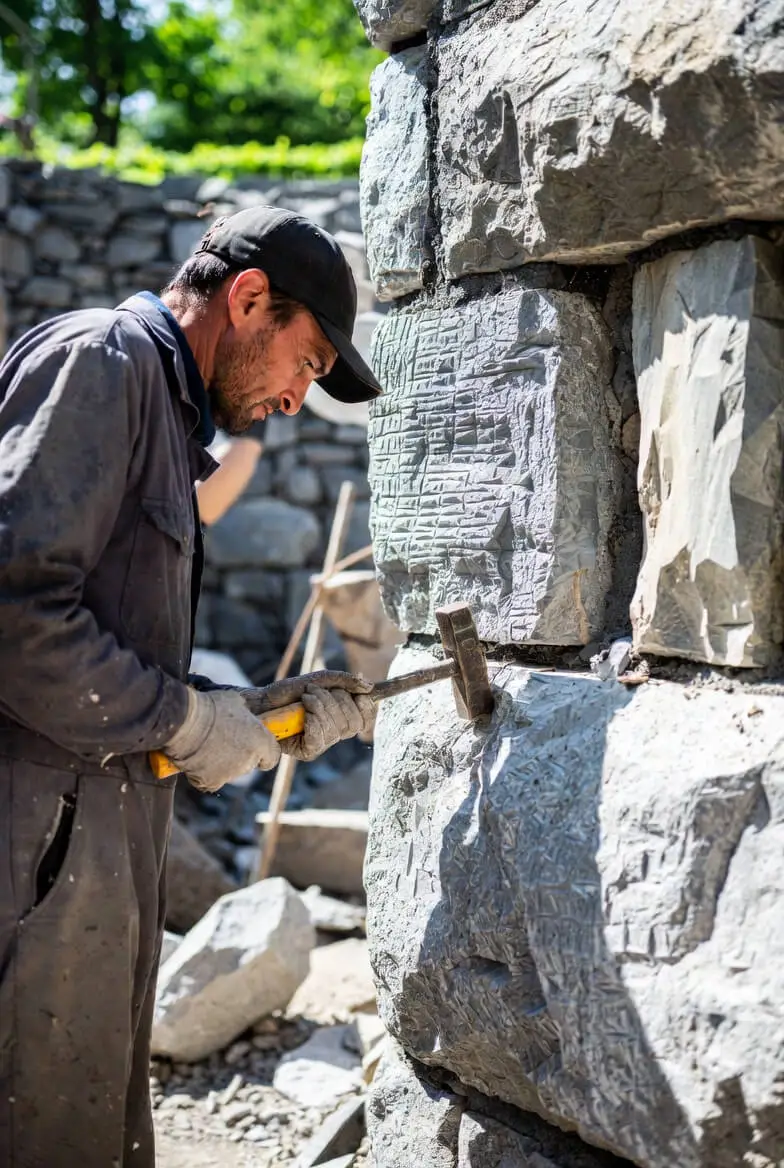
- Banker Mason: Banker masons work in workshops, shaping stone with hand and power tools. This involves detailed carving, architectural mouldings, and sometimes sculptural work.
- Fixer Mason: Fixer masons take prepared stone and install it on-site. They work with walls, cladding, facades, and often work at height.
- Memorial Mason: Specializes in creating headstones and memorials, typically for the funeral trade.
- Heritage Mason: Works on restoring historical buildings like cathedrals, castles, and listed buildings, using traditional techniques.
Most training starts with core skills, so you don’t need to choose a specialty right away. You can start with the basics and specialize later.
Pathways to Learning Stonemasonry
Apprenticeships: Earn While You Learn
Apprenticeships are the gold standard for learning stonemasonry. You’ll work for a company or organization (like a cathedral workshop or a conservation firm), spending four days a week on-site and attending college one day a week.
Over 2-3 years, you’ll work toward qualifications such as the NVQ Level 2 and 3 Diplomas in Stonemasonry and City & Guilds certifications.
The pay isn’t huge at first, apprentice wages typically start modestly, but you’re earning while you learn a valuable skill.
Heritage apprenticeships, like those offered by cathedral workshops, can take around 30 months and focus on traditional conservation methods. You’ll need to be 16+ to apply.
Check the government’s apprenticeship website or approach stonemasonry firms directly to find apprenticeship opportunities. It’s a great way to get hands-on experience while gaining qualifications.
3.2 College Courses: Building a Foundation
If you prefer a more structured learning environment or can’t find an apprenticeship right away, college courses are a solid option.
Institutions like the Building Crafts College in London, Moulton College, and colleges in Bath, York, and Edinburgh offer full-time stonemasonry diplomas at Levels 1, 2, and 3.
These courses typically last 1-2 years and cover everything from tool use and safety to technical drawing and stone carving techniques.
However, keep in mind that while college courses are valuable, employers tend to prioritize on-the-job experience. Many students use college courses as a stepping stone to apprenticeships or their first job in the industry.
3.3 Short Courses & Workshops: Taster Sessions
Not sure if stonemasonry is for you? Short courses and workshops offer a great way to test the waters. These courses, which typically last a weekend or a week, allow you to get hands-on with stone carving or letter cutting without a long-term commitment.
Places like Salisbury Cathedral, the Scottish Lime Centre, and the Stone Academy offer these short courses, which are perfect for hobbyists or DIY enthusiasts.
While they won’t give you a formal qualification, they’re a fun way to get a taste of the craft and they might inspire you to pursue a full-time career in stonemasonry.
On-the-Job Training: The Informal Route
Some people learn stonemasonry the traditional way: starting as labourers on construction or restoration sites and gradually picking up skills from experienced masons.
If you have prior experience in construction or bricklaying, this can be an ideal route. It’s less structured than an apprenticeship, but it’s still possible to move into stonemasonry by gaining on-site experience.
Once you’ve learned the basics, it’s highly recommended to pursue formal qualifications, like NVQs, to prove your competence. These qualifications will help you advance in your career and make you more attractive to potential employers.
Essential Qualifications & Cards You’ll Need
Before you can work on most UK construction sites, you’ll need a CSCS card, proof that you’ve passed the CITB Health, Safety, and Environment test. Most apprenticeships will help you get this qualification, but it’s important to know that it’s required for working on construction sites.
As you progress, your qualifications will stack up: starting with a Level 2 Diploma, moving to Level 3 as you gain more experience, and potentially advancing to Level 4/5 if you specialize in heritage or conservation masonry. A driving license can also be helpful, especially if you’re a fixer mason traveling between sites.
Skills You’ll Develop
Stonemasonry is about much more than just lifting heavy stones. You’ll learn a variety of technical and physical skills, including:
- Hand and power tool use: Mallets, chisels, grinders, and diamond cutters will become part of your daily routine.
- Blueprint reading: Understanding technical drawings and setting out measurements is crucial.
- Stone types: You’ll learn the differences between limestone, sandstone, granite, and marble, and how to work with each one.
- Stone carving and dressing: Whether you’re creating ornate architectural features or simple memorials, precision is key.
- Problem-solving and patience: Stonemasonry requires great attention to detail. A millimeter here or there can make a huge difference.
The job requires physical stamina, but it’s not just about raw strength—hand-eye coordination, patience, and a meticulous approach are far more important.
What to Expect: Day-to-Day Realities
Let’s be straight: stonemasonry is physically demanding. If you’re working as a banker mason, expect dust, noise from power tools, and hours on your feet in the workshop. Fixers work outdoors in all weathers, often at height on scaffolding.
Safety gear, including hard hats, steel-toe boots, goggles, and ear protection, is essential. But there’s something deeply satisfying about ending the day with a tangible result: whether it’s a carved finial or a repaired window tracery.
If you’re not afraid of tough work and enjoy seeing your progress, this could be the career for you.
Career Progression & Opportunities
Stonemasonry offers genuine career progression. You might start as a trainee, earning around £18,000-£22,000, and move up to £25,000-£32,000 as a qualified mason.
Specialize in areas like heritage conservation, fine carving, or letter cutting, and salaries can rise to £35,000-£38,500 or more. Many masons also go self-employed, setting their own rates and choosing projects.
With experience, you could also transition into roles like site supervisor, estimating, or project management. And because stonemasonry skills are valued worldwide, there are opportunities for international work, from Paris to Peru.
Conclusion
Learning stonemasonry is more accessible than you might think. Whether you choose an apprenticeship, a college course, or start with a weekend workshop, the doors are open and you don’t need top grades, just willingness to learn and graft.
From London’s Georgian terraces to York’s medieval cathedrals, skilled stonemasons are in demand. If you’re drawn to work that combines craftsmanship, history, and the satisfaction of creating something permanent, take that first step.
Visit a college open day, apply for an apprenticeship, or try a carving course. Your hands might just shape the skyline for the next century.
Common Stonemasonry Problems in London Properties
Stonemasonry vs Brick Masonry
What Does A Stonemason Do?
Tuck Pointing vs Repointing whats the difference?
How Old is Stonemasonry