
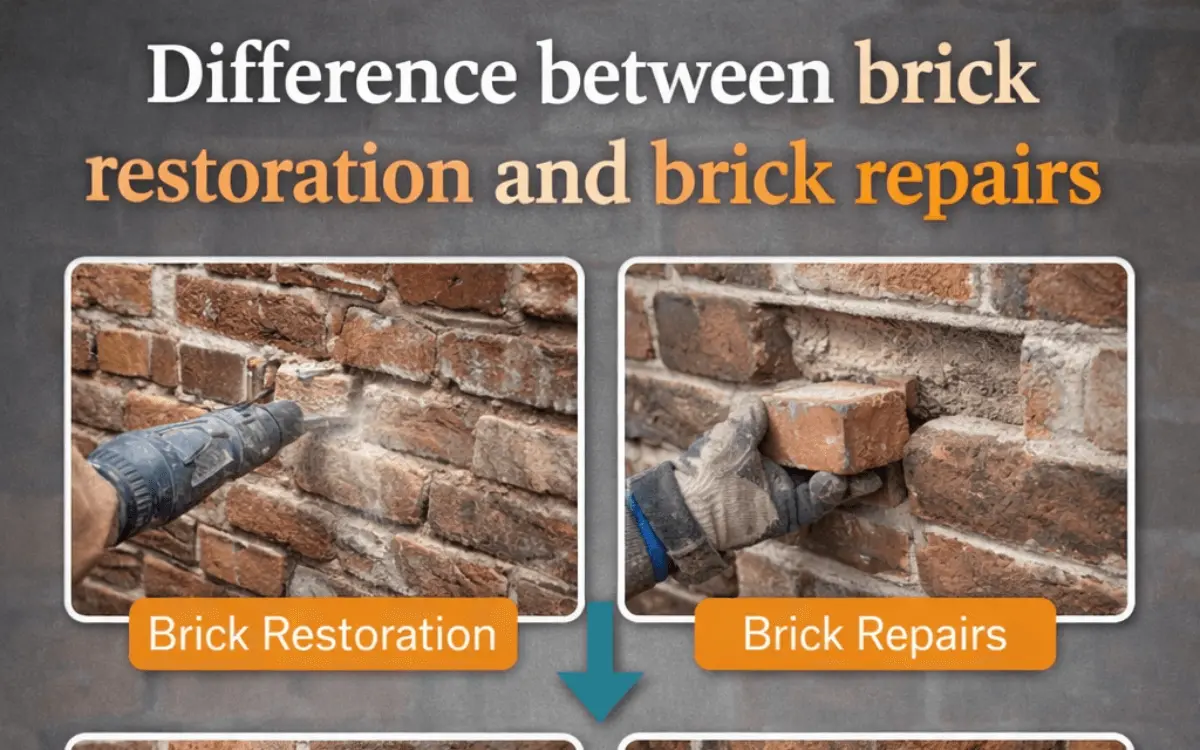
Difference between brick restoration and brick repairs
The terms “brick restoration” and “brick repair” are often used interchangeably. However, they represent two distinct processes with different goals and scopes.
For property owners, particularly those with Victorian, Edwardian, or other period properties, understanding the difference is crucial.
Knowing when to repair and when to restore can save time, money, and preserve the building’s historical character.
In this article, we’ll break down the key differences between brick restoration and brick repairs, helping you make an informed decision about your masonry needs.
WHAT IS BRICK REPAIR?
Brick repair refers to the process of fixing specific, localized problems in the masonry. Unlike restoration, which deals with comprehensive, large-scale work, repairs are typically quick and targeted interventions designed to address minor issues before they worsen.
Common brick repair tasks include repointing lime mortar joints (which are deteriorated), replacing cracked or chipped bricks, and sealing gaps to prevent moisture damage.
Some examples of brick repairs are:
- Repointing: The process of replacing old or cracked mortar joints to restore structural strength, appearance and prevent water infiltration.
- Crack Repairs: Filling in small cracks in the brickwork or mortar to prevent further damage.
- Brick Replacement: Replacing individual damaged bricks, often due to weathering or impact damage.
Repairs are generally considered routine maintenance for buildings, allowing property owners to address specific issues without disrupting the overall structure.
Repairs are cost-effective, require less time, and have minimal impact on the building’s appearance. For buildings that are not historically significant or where damage is minimal, repairs are often the ideal solution.
WHAT IS BRICK RESTORATION?
Brick restoration is a more extensive process designed to bring the brickwork of a building back to its original condition.
Unlike repairs, which focus on fixing localized issues, restoration addresses larger-scale problems, often involving the entire façade or significant sections of the building.
The goal is to restore the historical character and appearance of the structure, especially for listed or heritage buildings.
Key tasks involved in brick restoration include:
- Deep Cleaning: Removing dirt, biological growth, pollutants, and staining from the brickwork to restore its original appearance.
- Full Repointing: Repointing entire sections of brickwork to ensure that the mortar joints match the original materials and techniques.
- Brick Replacement: Replacing large sections of damaged or deteriorated bricks with matching units, ensuring consistency in color, texture, and size.
- Structural Stabilization: Repairing or reinforcing walls with wall ties, anchors, or other techniques to address underlying structural issues.
- Restoration of Architectural Features: Reinstating original architectural details, such as decorative moldings, that may have been damaged over time.
Restoration is ideal for heritage properties, such as Victorian or Edwardian buildings, where the goal is to preserve the architectural value of the structure.
It’s a more labor-intensive and expensive process but is necessary for maintaining the cultural heritage and aesthetic of older buildings.
KEY DIFFERENCES: RESTORATION VS REPAIRS
|
Category |
Brick Repairs |
Brick Restoration |
|---|---|---|
|
Scope & Scale |
Targeted fixes for specific, localized issues like cracks, damaged bricks, or deteriorating mortar joints. |
A comprehensive, extensive process aimed at rejuvenating entire sections of brickwork or facades. |
|
Goals & Purpose |
Preventative maintenance that addresses immediate concerns to maintain structural stability. |
Preservation of historical character, ensuring the building returns to its original condition while addressing any underlying structural issues. |
|
Extent of Work |
Focuses on minor, isolated issues that don’t disrupt the overall structure. |
Involves large sections of the building, often including the entire façade or multiple areas of the structure. |
|
Timeline |
Typically completed in a matter of days to weeks. |
A lengthy process that can take weeks or even months, depending on the size and complexity of the project. |
|
Cost |
Generally more affordable, with a lower initial investment. |
More expensive due to the scope of work, specialized materials, and labor involved. |
|
Building Type |
Suitable for modern buildings or buildings with minor issues. |
Primarily for historic or listed buildings where preserving the architectural integrity is essential. |
|
Expertise Required |
Can often be handled by general masonry contractors. |
Requires specialized knowledge of heritage building techniques and materials, typically involving skilled craftsmen. |
|
Materials & Techniques |
Uses standard modern materials and techniques. |
Requires period-appropriate materials, traditional methods, and a focus on authenticity. |
WHEN DO YOU NEED BRICK REPAIRS?
Brick repairs are the right choice when you notice minor damage or wear to your masonry that doesn’t affect the overall integrity of the building. Common scenarios when brick repairs are needed include:
- Cracked or chipped bricks.
- Deteriorating mortar joints that need repointing.
- Loose or displaced bricks that need resetting.
- Minor cosmetic damage or weathering on newer building.
- Small sections of the building needing attention (such as a wall or corner).
Brick Repairs in London are also ideal for buildings that are not listed or in conservation areas, where the focus is on addressing immediate issues rather than preserving historical details.
Regular repairs can prevent small problems from becoming major structural issues and keep the building in good condition.
WHEN DO YOU NEED BRICK RESTORATION?
Brick restoration is necessary when the building is showing signs of significant deterioration, especially in heritage properties or older buildings.
Here are some situations where restoration is the better option:
- The building is listed or located in a conservation area.
- Extensive damage to the façade, including spalling bricks or crumbling mortar.
- Historical features and architectural elements need to be preserved or reinstated.
- There are underlying structural issues such as wall instability or water damage.
- You want to restore the building to its original appearance, maintaining historical integrity.
Restoration is crucial for properties where preserving the historical character and longevity of the building is a priority. In London, this often applies to Victorian and Edwardian buildings that require more than just surface-level repairs.
CONCLUSION
Understanding the difference between brick repairs and brick restoration is key to making informed decisions about your property’s maintenance needs.
Repairs are ideal for minor issues, while restoration is necessary for preserving the historical integrity of heritage buildings.
To ensure the right approach for your building, it’s essential to seek professional advice. Contact us today for a free assessment and expert guidance on your masonry needs across London.
Related Posts:
Common Stonemasonry Problems in London Properties
Stonemasonry vs Brick Masonry
What Does A Stonemason Do?
Lime Mortar vs Cement Mortar
How To Learn Stone Masonry