
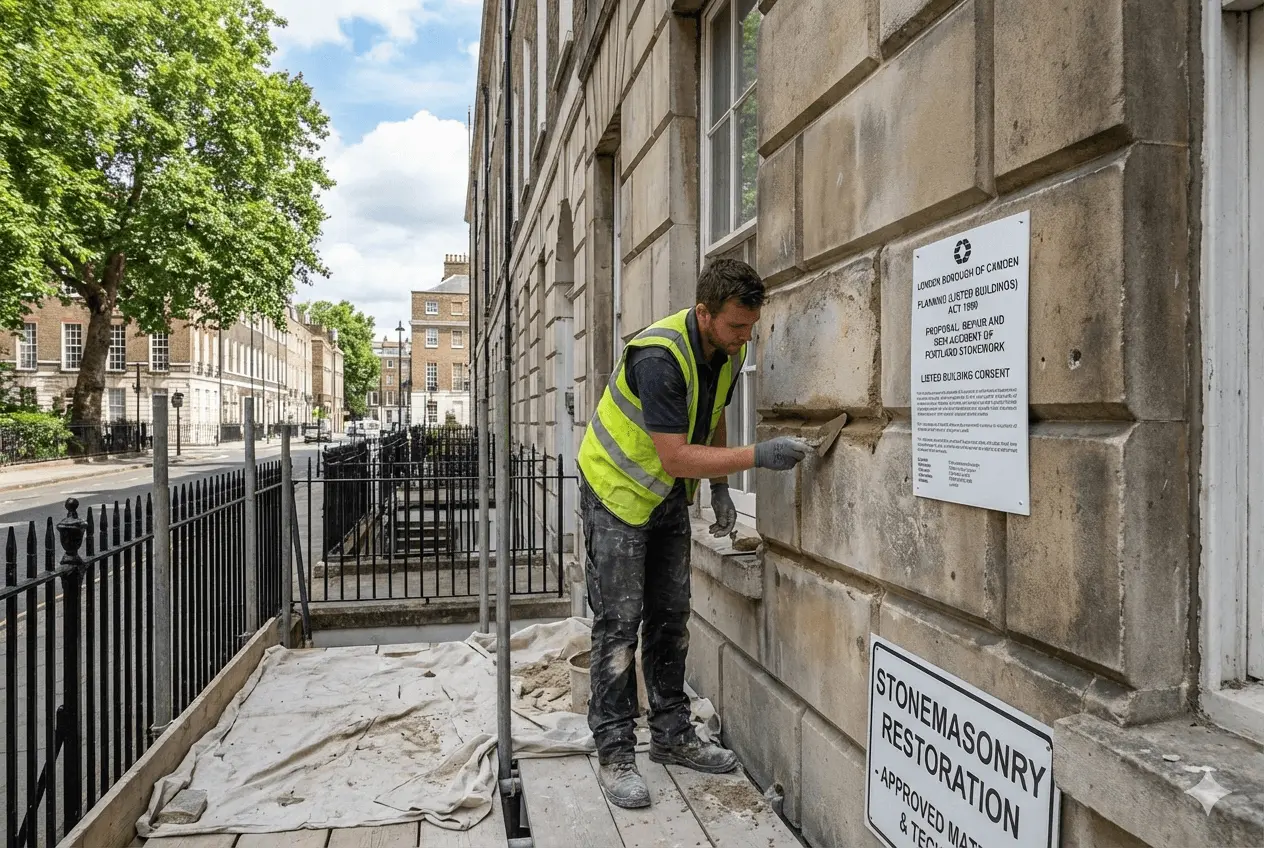
Listed Building Rules for Stone Repairs in London
Discovering cracked or damaged stonework on a listed building can be a homeowner’s nightmar, especially in London, where over 20,000 listed properties stand as pillars of architectural history.
The prospect of repairing or restoring stone elements may seem straightforward, but navigating the legal requirements surrounding listed building consent can be overwhelming.
Unauthorized repairs can lead to hefty fines or even imprisonme]nt. This guide simplifies the complex process, helping you understand the listed building rules for stone repairs, including consent requirements, approved materials, and finding qualified specialists.
Whether you’re maintaining your Georgian townhouse or restoring a Victorian terrace, ensuring heritage stone restoration is done properly is crucial for preserving London’s architectural heritage.
Understanding Listed Building Grades and Their Impact on Stone Repairs
Grade I, II, and II* listed buildings each come with varying levels of scrutiny and approval requirements when it comes to stone repairs.
- Grade I listed buildings (about 2.5% of listed buildings) are of exceptional interest, and their preservation is critical. Any repairs, even minor, must undergo a rigorous process.
- Grade II* buildings, particularly important, still require a high degree of protection, but some repairs might receive slightly more flexible consideration.
- Grade II listed buildings are of special interest, and while the process is less stringent, any alterations affecting their character still require consent.
All listed buildings, regardless of grade, require listed building consent if alterations will affect the property’s character.
For example, repairing stone in a conservation area may trigger additional restrictions, as these areas have their own set of rules. The grade of the building influences both the approval speed and the specificity of repair regulations.
When You Need Listed Building Consent for Stone Repairs
Understanding when listed building consent is required for stone repairs can save you time and effort. Here’s a breakdown of what does and doesn’t require consent:
Requires Consent:
- Re-pointing with modern mortar (cement is prohibited).
- Stone replacement (even if the replacement stone matches the original material and appearance).
- Stone cleaning methods that are aggressive, such as pressure washing or using acidic solutions.
- Changing the stone profiles, removing or adding decorative elements (e.g., rustication, quoins, window surrounds).
May Not Require Consent:
- Emergency repairs (immediate action can be taken without consent, but you must notify the Local Planning Authority (LPA) immediately).
- Internal work that does not affect structural or visible features.
- Minimal maintenance using identical materials (check first with your LPA).
To be safe, it’s always better to seek consent before starting any work. Unauthorized work can result in enforcement action, with fines up to £20,000 or imprisonment.
The Listed Building Consent Application Process in London
Navigating the listed building consent application process is crucial for ensuring compliance. Here’s a step-by-step guide on what you’ll need to do:
Step 1: Pre-application Consultation
Consulting with a conservation officer from your Local Planning Authority (LPA) is highly recommended. This consultation, often free, helps clarify what’s required and guides the process.
Step 2: Commission a Heritage Statement
You’ll need to commission a heritage statement or method statement from a qualified conservation architect or specialist. This statement will outline the scope of work, repair methods, and the impact on the building’s original fabric.
Step 3: Prepare Detailed Plans
Your application should include detailed plans showing the existing stonework and proposed repairs, specifying materials and techniques. Accurate documentation is vital for approval.
Step 4: Submit Your Application
Submit your application to the relevant London borough (such as Westminster, Camden, or Kensington and Chelsea). This typically takes 21 days minimum, though the total consultation period can extend to 8-12 weeks.
Step 5: Statutory Consultation
For Grade I and II* listed buildings, Historic England will be consulted during the application process. This step adds a layer of review for the most historically significant properties.
Step 6: Decision and Approval
Once all consultations are complete, you will receive a decision. The decision can be approved, conditionally approved, or refused. The timeline for approval can vary, but it’s important to be patient and ensure all paperwork is correct.
Step 7: Start Work
Once approved, work must begin within three years. Keep all documentation and approvals, as future owners will need to know what was done to maintain the building’s heritage.
Approved Materials and Methods for Stone Repairs on Listed Buildings
When it comes to stone repairs, using the right materials is critical to maintaining the historical integrity of a listed building. Here’s what you need to know:
- Traditional Lime Mortar: Modern cement-based mortars are not permitted for repairs due to their lack of breathability and flexibility. Lime mortar is required because it allows the building to “breathe,” preventing moisture from becoming trapped and damaging the stone.
- Stone Matching: Replacement stone must match the original in color, texture, and grain. Stones like Portland stone, Bath stone, and York stone are often used for repairs, but it’s essential that the replacement stone matches the original in every way. Petrographic analysis may be required to ensure an exact match.
- Repair Techniques: Acceptable methods include plastic repairs, stone indents, Dutchman repairs (inserting patches of stone into larger gaps), and stone consolidation. These techniques help preserve the original fabric of the building.
- Prohibited Methods: Avoid aggressive cleaning methods such as high-pressure washing or acidic cleaners, which can damage the stone. Additionally, using non-breathable sealants or surface coatings is not allowed.
By following the guidance from Historic England and the Stone Federation Great Britain, you can ensure that your repairs meet the highest standards for conservation.
Finding Qualified Stone Masons and Specialists in London
When hiring professionals for stone repairs, it’s essential to choose qualified craftsmen with experience in listed building work. Here’s how to vet potential contractors:
- Stone Mason Qualifications: Look for masons with relevant qualifications, such as Stone Federation registration or NVQ Level 6 in heritage skills. Ensure they have a proven track record in listed building work.
- Conservation Architects: For complex projects, hiring a conservation architect ensures that repairs are done sympathetically and in line with heritage regulations.
- References and Portfolio: Request references from previous listed building projects and verify them with the Local Planning Authority (LPA). A solid portfolio will showcase the mason’s skill in sympathetic repairs and heritage stone restoration.
- Insurance and Qualifications: Ensure that contractors have public liability insurance and professional indemnity insurance for designers. Also, be wary of contractors who push you to bypass consent or use inappropriate materials like cement mortar.
Costs and Timeframes for Listed Building Stone Repairs
Restoring stonework on listed buildings is often more expensive and time-consuming than standard repairs. Here are some typical costs and timeframes:
- Consent Application: Expect the application process to take 8-12 weeks for Grade II buildings, and up to 16 weeks for Grade I.
- Heritage Statement: Commissioning a heritage statement can cost between £500 and £2,000, depending on the complexity of the project.
- Stone Repair Costs: The cost for stone repairs can be up to 50% higher than standard repairs. For example:
- Re-pointing: £80-£150 per square meter.
- Stone Replacement: £200-£400 per stone, depending on size and complexity.
Emergency repairs can be completed faster, but they still require retrospective consent. Factor in fees for architects, specialist surveys, and any samples required for approval.
While heritage repairs are costly, they protect the long-term value of your property and ensure it remains part of London’s architectural legacy.
Conclusion:
The process of restoring stonework on listed buildings can seem daunting, but it’s essential for preserving London’s heritage.
By following listed building rules, seeking heritage stone restoration, and consulting with professionals, you ensure that your property retains its historical integrity.
The listed building consent process protects not only your investment but also the character of the building for future generations.
Always consult with your Local Planning Authority and seek conservation officer approval before starting any stone repair work.
With the right approach, you’ll maintain the beauty and value of your Georgian townhouse, Victorian terrace, or any other historic property.