
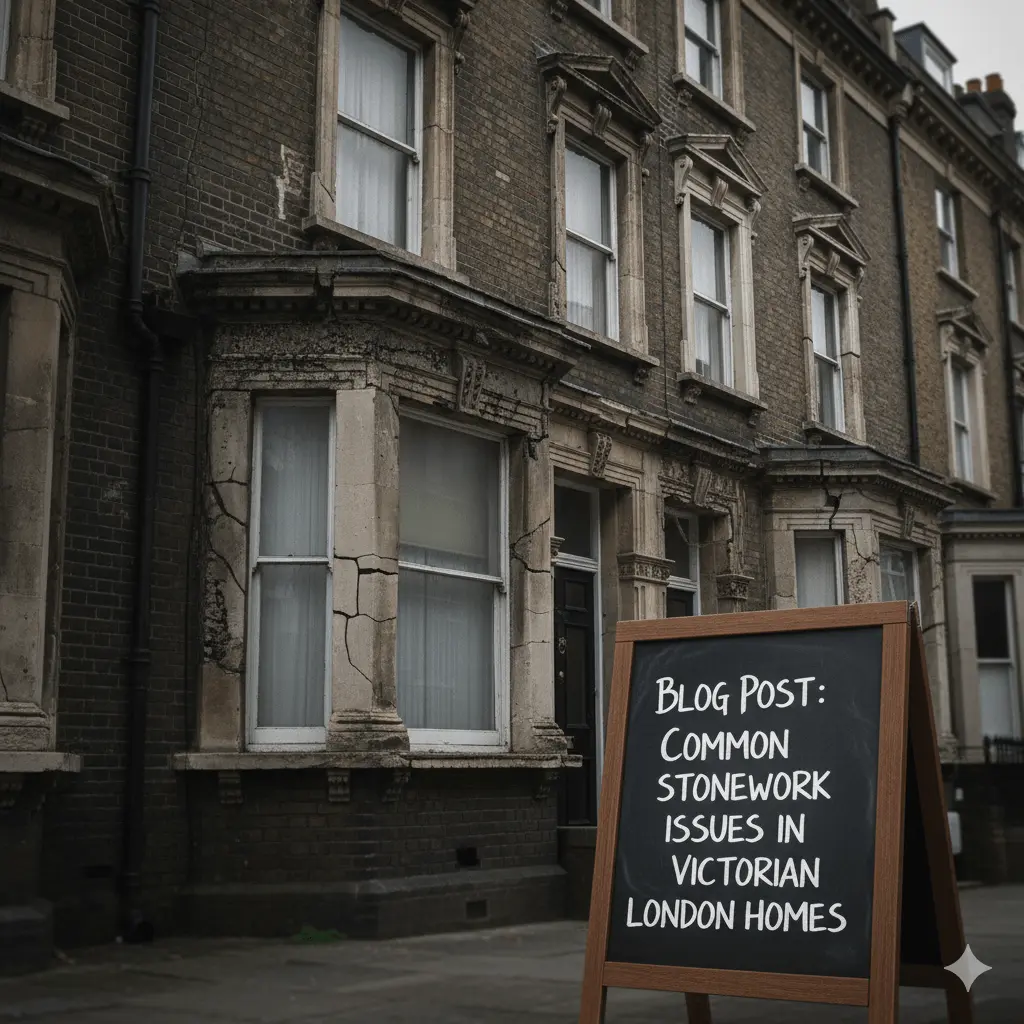
Common Stonework Issues in Victorian London Homes
Victorian terraces are one of the most iconic features of London’s architecture, with millions of them built between 1837 and 1901. These beautiful homes, which range from 100 to 180 years old, are often full of character but are also facing age-related challenges.
The construction methods used in Victorian buildings such as solid brick walls, shallow foundations, and soft London stock brick, create specific vulnerabilities over time.
In this post, we’ll walk you through the most common stonework and masonry issues found in Victorian homes, explain their causes, and offer practical solutions to help you protect your property.
Understanding Victorian Construction
The unique construction methods used in Victorian homes are both their charm and their Achilles’ heel. Many Victorian homes were built with solid walls made of London stock brick, a soft, porous material that, while visually distinctive, is prone to weathering.
These walls are typically only 9 inches thick and lack a cavity, making them vulnerable to rain penetration. Moreover, many properties were constructed with shallow foundations (only 200-300mm deep) that were sufficient for the time but are inadequate by modern standards.
Lime mortar, which was commonly used in Victorian buildings, is softer than modern cement and allows for natural movement within the structure. However, this same softness means it deteriorates faster and allows more moisture to enter the stonework.
Furthermore, many early Victorian homes lack a damp-proof course (DPC), allowing rising damp to enter. Decorative features, such as Bath stone window surrounds and bay windows, are also prone to weathering, as Bath stone is soft and vulnerable to London’s pollution.
Issue #1: Spalling and Weathered Brickwork
What it Looks Like:
Spalling or weathered brickwork is easily identifiable by brick faces that are flaking off, leaving behind a powdery texture or exposed surface erosion.
Causes:
Victorian London’s industrialization led to high levels of pollution and acid rain, which, combined with freeze-thaw cycles and salt crystallization, accelerated the deterioration of the bricks.
South-facing walls, bay windows, parapets, and chimneys are particularly susceptible, as they receive the most exposure to rain and pollution.
Consequences:
Spalling bricks lead to water penetration, weakening the structure and causing further damage to the surrounding masonry. Over time, this can result in significant aesthetic and structural issues.
Solutions:
To repair weathered brickwork, you should replace the damaged bricks with matching London stock brick to maintain the property’s historical integrity. Stone consolidation can also help restore weathered surfaces. Ensure any repairs are breathable, allowing moisture to escape naturally.
Issue #2: Failed or Failing Lintels
What it Looks Like:
Signs of failing lintels include visible cracks above windows (often stepped or diagonal), sagging window frames, and rust stains on steel lintels.
Causes:
Many Victorian homes built post-1880s have steel lintels, which are susceptible to rusting over time. The decay of stone lintels is often caused by thermal movement, settlement, or the failure of load-bearing sash windows.
In some cases, modern replacements with uPVC or other materials have caused lintel failure because they don’t bear weight as effectively as the original sash windows.
Consequences:
Lintel failure is a serious structural issue. If left unaddressed, the wall above the window could collapse, leading to further damage or even danger.
Solutions:
A structural engineer should assess the lintel’s condition. Steel lintels should be replaced with appropriately sized galvanized or coated steel, while stone lintels may need repair or replacement depending on the extent of the damage.
Always ensure proper support is in place during lintel work to avoid structural collapse.
Issue #3: Bay Window Problems
What it Looks Like:
Cracks where the bay window meets the main wall, sagging floors in the bay, or a leaning structure are all signs of bay window issues.
Causes:
Bay windows often have separate foundations from the main structure of the house, which makes them more prone to differential settlement. The timber bressummer beams (which support the bay window) may also rot, further exacerbating the issue.
Consequences:
Bay window problems lead to structural separation, water infiltration, and sloping floors, which can worsen over time and cause significant damage to the property.
Solutions:
To repair bay window issues, you may need to underpin the bay’s foundations and replace any decayed timber bressummer beams. Structural ties can also be used to better integrate the bay with the main structure. Professional assessment is essential to prevent further movement.
Issue #4: Inappropriate Cement Repairs
What it Looks Like:
Hard grey mortar, which stands out starkly against the softer, natural tones of the original stone, often indicates poorly executed repairs. This type of mortar traps moisture, leading to accelerated brick spalling.
Causes:
Many 20th-century repairs were carried out with cement, which was not suitable for Victorian homes. Cement mortar is impermeable, preventing the natural breathability of the original lime mortar and trapping dampness in the wall.
Consequences:
Cement repairs worsen the original problem by trapping moisture within the structure, leading to increased brick spalling, rising damp, and salt migration that damages the masonry further.
Solutions:
To fix inappropriate cement repairs, the cement should be removed, and the wall should be repointed with lime mortar (NHL 3.5 is commonly used). Lime mortar allows the wall to breathe naturally, which prevents further damage.
Issue #5: Stone Window Surround Deterioration
What it Looks Like:
Eroded sills, cracked lintels, and crumbling Bath stone are all signs of stone window surround deterioration.
Causes:
Bath stone and Portland stone, commonly used in decorative window surrounds, are soft stones that deteriorate more quickly, especially in London’s polluted environment. Over the past 150 years, weathering from rain, wind, and pollution has caused these stones to erode.
Consequences:
Deteriorated stone can lead to water ingress, which damages the surrounding brickwork and potentially the interior of the home. Crumbling stone also detracts from the home’s aesthetic value.
Solutions:
Stone consolidation techniques can restore some of the stone’s original strength, while dutchmen repairs (inserting patches of matching stone) can replace heavily deteriorated areas. In severe cases, replacement with matching stone may be necessary.
Issue #6: Rising Damp and Moisture Problems
What it Looks Like:
Signs of rising damp include tide marks on the walls, peeling plaster, a musty smell, and visible salt deposits.
Causes:
Rising damp is common in Victorian homes due to the lack of a damp-proof course (DPC) and solid brick walls, which absorb moisture from the ground. Defective gutters or raised ground levels can exacerbate the problem.
Consequences:
Rising damp can cause long-term damage to plaster, brickwork, and flooring. If left untreated, it can lead to more serious structural problems.
Solutions:
To address rising damp, consider a chemical DPC injection, which can prevent moisture from rising further. Lime plaster should be used for repairs, as it is more breathable than cement. Ground level reduction and gutter repairs are also essential to prevent further moisture issues.
When to Call Professionals
For issues such as structural cracks, lintel failure, or bay window problems, a professional assessment is essential. Structural engineers should assess any cracks in the masonry, while lintel failure requires immediate attention.
Listed buildings also require specialist heritage masons and conservation approval before any work can begin. If the damage is over 50%, replacement rather than repair is often the best option.
DIY Suitable:
Minor repointing, cleaning, and gutter maintenance are generally safe for DIY. For anything that could affect the structural integrity of your home, it’s best to call in a professional.
Conclusion
Victorian homes are beautiful and full of character, but they come with unique challenges that require specific knowledge and care. Issues like rising damp, spalling brickwork, and lintel failure are often interconnected, and early intervention is key to preventing further damage.
Using the right materials, such as lime mortar instead of cement, is critical to ensuring your home remains in good condition. For structural issues, always seek professional assessment to ensure the safety and longevity of your property.