Tuckpointing vs Repointing: What’s the Difference and Which one Do You Need?
If you’ve searched for ‘brick repair’ or ‘mortar repair,’ you’ve probably run into two terms that seem to mean the same thing: tuckpointing and repointing. Even professional contractors use them interchangeably, which doesn’t help the confusion.
But here’s the thing, they’re actually different techniques with different purposes and different results. If your Victorian terrace or Georgian townhouse needs mortar work, knowing which one you need could save you thousands of pounds and ensure the job’s done right.
Let’s clear up the confusion once and for all.
What is Repointing?
Repointing is the straightforward answer to damaged mortar joints. It’s exactly what it sounds like: removing the old, crumbling mortar between your bricks and replacing it with fresh mortar that matches the original in color, texture, and composition.
The goal of brick repointing in London is purely functional i-e to restore the structural integrity of your brickwork, prevent water penetration, and protect your building.
The process involves raking out the damaged mortar (usually to a depth of about ½ to 1 inch), thoroughly cleaning the joints, then carefully filling them with new mortar mixed to match the original.
You end up with one color of mortar throughout, no fancy contrast or decoration, just solid, weather-resistant joints that’ll last another 25-30 years depending on external factors. This is the standard repair for the vast majority of London properties with mortar problems.
What is Tuckpointing?
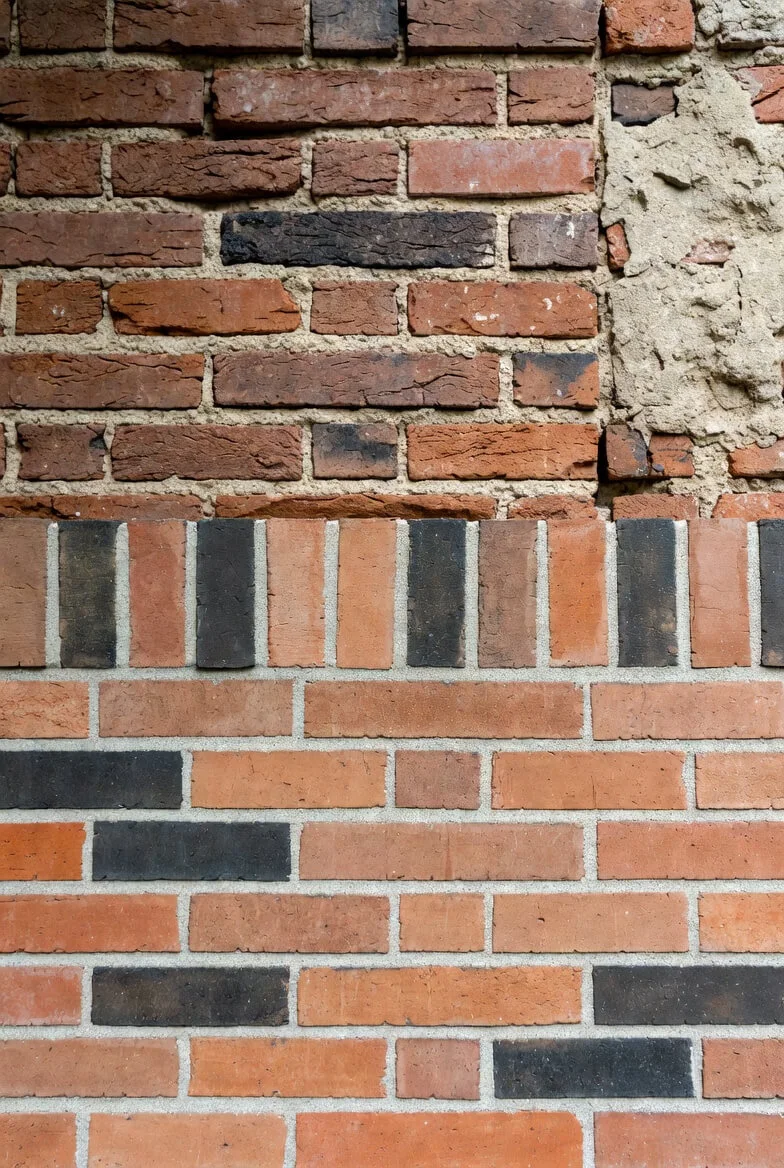
Tuckpointing in London, on the other hand, is all about appearance. It’s a decorative technique that uses two contrasting colors of mortar to create the illusion of incredibly fine, precise joints between bricks.
Here’s how it works: first, mortar dyed to match your brick color fills the joints flush with the brick surface, making the bricks and mortar blend seamlessly.
Then, and this is the signature move, a thin ribbon of contrasting mortar (traditionally white or cream lime putty, though black was also fashionable in Victorian times) is carefully placed down the center of each joint.
The result? Your brickwork looks like it was laid with razor-thin joints, creating a crisp, elegant appearance that was all the rage in Georgian and Victorian England.
It’s more expensive than repointing because it requires serious skill and takes longer. Think of it as the difference between a paint job and a restoration with pinstriping, tuckpointing is the luxury version.
The Key Differences at a Glance
Let’s break down the key differences so you can see which one actually applies to your situation:
- Purpose: Repointing is structural and functional, it’s about fixing damaged joints and protecting your building. Tuckpointing is primarily aesthetic, it’s about creating a specific decorative appearance.
- Mortar Colors: Repointing uses one color of mortar that matches your original joints. Tuckpointing uses two colors: brick-matched mortar plus a contrasting ribbon (usually white, cream, or black).
- Appearance: Repointing blends in, when done well, you shouldn’t really notice it. Tuckpointing stands out, it creates that distinctive look of ultra-fine joints.
- Cost: Repointing typically runs £3-£15 per square foot. Tuckpointing costs more, usually £5-£25 per square foot, because it’s more labor-intensive and requires higher skill.
- Time and Skill: Both require experienced masons, but tuckpointing demands master-level precision. It takes longer too, sometimes twice as long as standard repointing for the same area.
- Longevity: Under normal conditions properly done repointing can last 25-40 years. Tuckpointing, being more of a surface treatment, typically lasts 20-30 years before needing attention.
Which One Do You Actually Need?
For 95% of homeowners, the answer is repointing. If your mortar is cracked, crumbling, missing chunks, or you’ve got loose bricks, gaps, or signs of water damage, you need repointing. It’s structural. It fixes the problem. That’s it.
You might need (or want) tuckpointing if:
- Your historic London property originally had tuckpointing and you’re restoring it to period-correct condition.
- You live in a conservation area and planning requires matching the original decorative pointing.
- You’re doing a high-end restoration where achieving that specific Georgian or Victorian aesthetic is worth the extra cost.
Even then, you’d typically repoint first for structural soundness, then add tuckpointing for appearance. Here’s the honest truth: tuckpointing won’t save a wall with serious mortar damage.
If your joints are failing structurally, no amount of decorative ribbon work will fix that, you need proper repointing. Think of tuckpointing as the optional aesthetic upgrade after the necessary structural work is done. For a typical Victorian terrace with deteriorating mortar, repointing is what you need.
The confusion comes from the terms being used interchangeably in the US and Canada, but here in the UK, especially for period London properties, the distinction still matters.
The Fascinating History: Why Tuckpointing Was Invented
Here’s where it gets interesting. Tuckpointing was invented in late 18th-century England, specifically to fool people.
Wealthy Georgians were obsessed with ‘rubbed brick’ (also called gauged brick): beautifully made bricks that were individually cut and rubbed smooth by hand after firing, then laid with incredibly thin joints of white lime putty.
The effect was stunning—perfectly uniform red bricks with crisp white lines, but eye-wateringly expensive.
Enter tuckpointing: a clever way to fake it. Builders could use cheap, irregular bricks, fill the joints with brick-colored mortar to hide imperfections, then add that thin white ribbon to create the illusion of fine rubbed brickwork.
It was architectural smoke and mirrors, and it worked brilliantly. By the Victorian era, tuckpointing was less about deception and more about achieving a high-quality finish on prestigious buildings.
Walk through Bloomsbury or Kensington today and you’ll see original tuckpointing on Georgian and Victorian facades, over 200 years old and still looking sharp.
What About Your London Property?
If you own a period property in London, here’s what matters: most Georgian and Victorian terraces were originally built with standard repointing, not tuckpointing.
Tuckpointing was reserved for high-status buildings, grand townhouses, mansion blocks, prestigious commercial buildings. So unless your property is particularly grand or you have evidence it originally featured tuckpointing, standard repointing is both historically appropriate and more cost-effective.
That said, if you’ve got a listed building or you’re in a conservation area like Bloomsbury or Greenwich, your local conservation officer may have specific requirements about matching original finishes.
It’s worth checking before you start. And regardless of which technique you choose, if your London property was built before 1930, make sure whoever does the work uses lime mortar, not cement, that’s what we at StoneMasonry London would do. That’s non-negotiable for protecting those soft old bricks.
Conclusion
So there you have it: repointing repairs and protects, while tuckpointing decorates and impresses. For most London homeowners dealing with crumbling mortar on their Victorian terrace or Georgian townhouse, repointing is what you need and it’s what you should ask for.
The key is hiring someone who actually understands the difference and can assess your property’s specific needs, whether that’s functional repair, aesthetic restoration, or both.
Now when a contractor mentions ‘tuckpointing’ for your standard mortar repair, you’ll know whether they’re using the term correctly or just using industry jargon loosely.
Get a proper assessment, ask about mortar type and compatibility, and don’t pay for decorative work when structural repair is what your building needs.
Common Stonemasonry Problems in London Properties
Stonemasonry vs Brick Masonry
What Does A Stonemason Do?
Lime Mortar vs Cement Mortar
How To Learn Stone Masonry