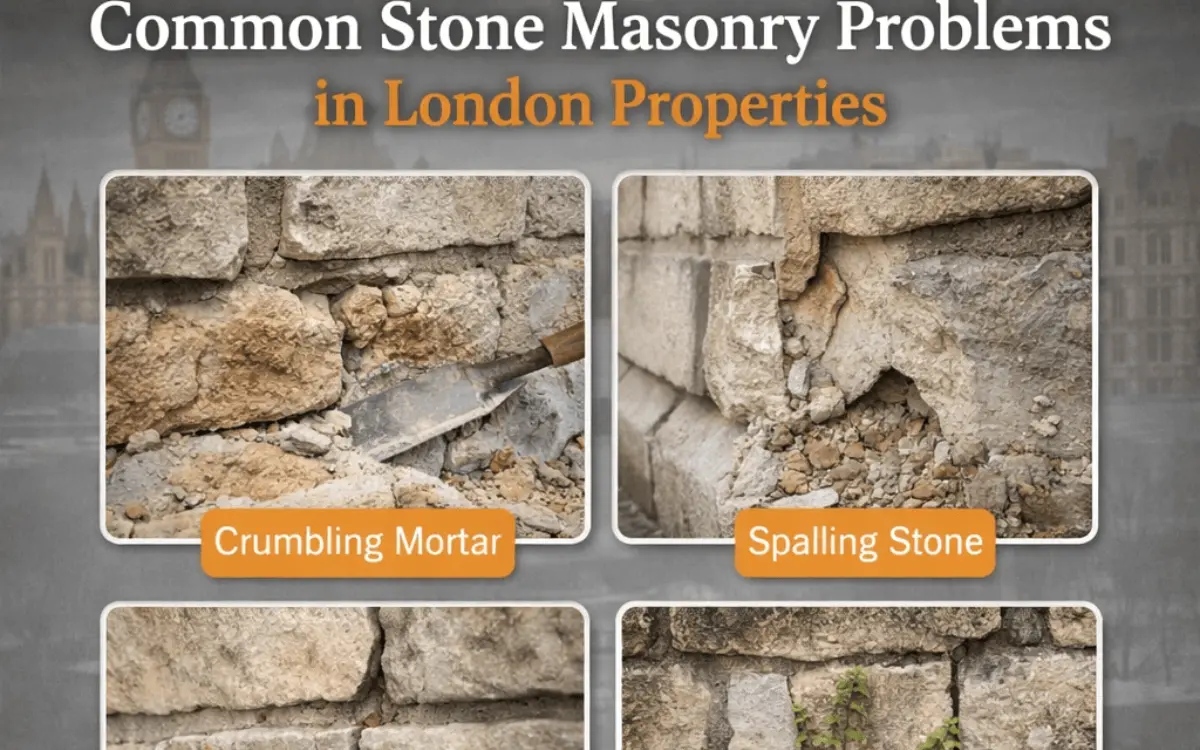
Common Stone Masonry Problems in London Properties
Stone masonry has long been a popular building method for homes and structures across London. Like any construction material, stone can suffer from issues over time, especially in a city with the unpredictable weather conditions we experience here.
Whether it’s the result of moisture, weathering, or wear and tear, stone masonry problems can become a significant concern for homeowners and shop owners alike.
In this post, we’ll try to talk about some of the most common stone masonry problems found in London properties, the factors contributing to these issues, and possible practical solutions to prevent or resolve them.
Why Do Stone Masonry Problems Occur?
Stone masonry is typically known for its longevity and strength, but external factors can contribute to the deterioration of stone over time.
London’s unpredictable weather is one of the primary causes of damage to stone structures which can lead to a range of issues such as cracking, staining, mortar deterioration and more.
The following are common causes of damage:
Water Infiltration:
Rain, humidity, and condensation can penetrate the mortar joints and stone surfaces. When water seeps into the stone, it can cause expansion and contractio which ultimately leads to damping, cracking and dissolution (the breakdown of stone surfaces).
Weathering and Freeze-Thaw Cycles:
London’s fluctuating temperatures, especially during winter, can cause water to freeze within the stone and mortar joints. Freeze thaw damage is a significant concern, as the repeated expansion and contraction of frozen water can degrade both the stone and mortar.
Movement of the Structure:
Over time, properties settle, and structural movement is inevitable. This natural shifting of the building’s foundation can cause cracks to form in the masonry.
Salt Crystallization:
Water that seeps into the masonry can also bring along salts from the ground or air. When the water evaporates, the salts crystallize within the stone which leads to staining and further deterioration.
Common Stone Masonry Problems: Causes & Solutions
1. Cracking of Stone and Mortar Joints
One of the most noticeable problems in stone masonry is cracking, which can occur in both the stone and mortar joints.
This cracking typically happens due to a combination of water infiltration, weather changes, and structural movement.
As we discussed earlier when water enters the joints or cracks, it can freeze, expand, and cause even larger cracks, resulting in further damage.
What Causes Cracking?
- Moisture from rain or condensation can seep into the stone or mortar.
- Expansion and contraction due to temperature fluctuations.
- Settling and shifting of the foundation over time.
Solutions to Cracking:
- Regular Inspection: Keep an eye on vulnerable areas where cracks might appear, particularly around window and door frames or at the base of walls.
- Repointing: If the mortar is damaged, repointing is a great solution to seal cracks and strengthen the joints.
- Stone Restoration: In severe cases where stones themselves are cracked, they might need to be replaced or repaired by professional stonemasons to restore the structure.
2. Staining and Discolouration
Staining is another common issue faced by London homeowners with stone properties. This is typically caused by water infiltration, pollutants in the air, or salt crystallization.
What Causes Staining?
- Water Seepage: Rainwater often carries dirt, pollutants, and minerals that stain the stone.
- Salt Crystallization: Water evaporation brings salts to the surface, leaving unsightly white marks.
- Moss and Algae Growth: Particularly in damp areas, moss and algae can grow on stone surfaces, leading to greenish or black stains.
Solutions to Staining:
- Cleaning: Using a gentle stone cleaner and soft brushes can remove surface stains. Avoid harsh chemicals that could damage the stone.
- Sealants: After cleaning, applying a breathable stone sealant can help prevent water from seeping into the masonry and causing further staining.
- Maintenance: Regularly clean the stone and inspect for signs of moisture buildup to prevent staining from becoming a persistent issue.
3. Salt Crystallization and Efflorescence
As mentioned earlier, salt crystallization is a common problem for stone buildings in London. This occurs when water seeps into the stone, carrying dissolved salts with it. As the water evaporates, the salts crystallize on the surface, causing visible white patches, a condition known as efflorescence.
What Causes Salt Crystallization?
- Water Seepage: Rainwater or groundwater can bring salts to the surface.
- Poor Drainage: Improper drainage around the foundation can cause water to collect and infiltrate the masonry.
Solutions to Salt Crystallization:
- Improve Drainage: Ensuring that the property’s drainage system is functioning properly can help keep water away from the walls and reduce the risk of salt buildup.
- Cleaning Efflorescence: The white marks left by salt crystals can be cleaned using water and a soft brush. Avoid scrubbing too hard, as this could damage the stone.
- Professional Restoration: In extreme cases, a professional mason can remove the damaged stone and replace it with fresh stone or restore the affected area.
4. Deterioration of Stone Surface (Dissolution)
Stone surfaces can also deteriorate over time, particularly when exposed to moisture for prolonged periods. This is known as dissolution, where the minerals in the stone begin to break down due to constant exposure to water and other environmental factors.
What Causes Deterioration?
- Prolonged Exposure to Water: Continual water absorption weakens the stone and causes surface deterioration.
- Air Pollution: Pollution can accelerate the breakdown of certain types of stone.
Solutions to Deterioration:
- Stone Repair: In cases of severe dissolution, the damaged stone may need to be replaced or repaired. Regular maintenance and early detection of issues can help prevent larger repairs.
- Sealing and Protection: Protecting the stone with a breathable sealant can slow down the deterioration process by preventing excessive moisture from entering the stone.
5. Structural Movement
Natural structural movement of older buildings is a concern, which can cause cracks in the stone masonry, especially around joints where the mortar has become weak or deteriorated.
What Causes Structural Movement?
- Settling of the Foundation: Over time, buildings naturally settle, leading to minor shifts that may cause cracks in the masonry.
- Vibration: Vibrations from traffic, construction, or nearby buildings can contribute to the movement of the structure.
Solutions to Structural Movement:
- Regular Inspections: Monitor the foundation especially in areas that have experienced shifting.
- Repointing and Stone Replacement: When movement causes cracks in the masonry, repointing and sometimes stone replacement are needed to restore the structure’s stability.
Conclusion
While stone is a robust and attractive building material, it’s not immune to the challenges posed by weather and other factors. Understanding the common problems and solutions is crucial to maintaining the health of your property.
Regular inspection, prompt repairs, and professional maintenance are key to ensuring the longevity and aesthetic appeal of your stone masonry.
If you’re experiencing any of these issues with your stone masonry, it’s essential to contact a skilled professional for advice and repairs. Addressing these problems early can save you time and money, and help protect the value and stability of your home for years to come.
Related Posts:
What does a stonemason do?
Difference between Stone Masonry and Brick Masonry
Difference Between Brick Repairs and Brick Restoration
Lime Mortar vs Cement Mortar
Tuck Pointing vs Repointing whats the difference?