
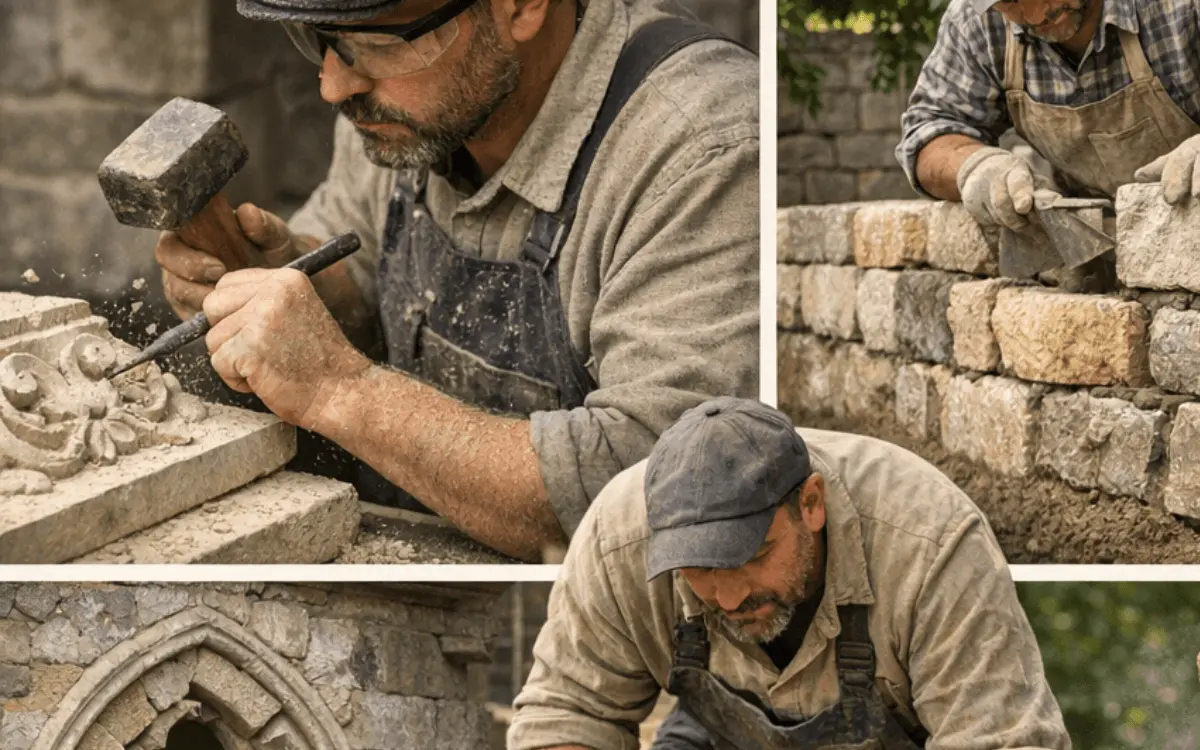
What Does A Stonemason Do? 2026 Guide
Stonemasonry is one of the oldest professions in the world, dating back to the time of the Egyptians and Greeks. This ancient craft has played a crucial role in creating and preserving some of the most iconic structures.
Today, stonemasons continue to shape stone with the same precision and artistry as their predecessors. In this article, we’ll explore what a stonemason does, their duties, skills, the types of stonemasonry work, and the role they play in preserving heritage structures in London.
Some people use the terms stone masonry and brick masonry interchangeably, but there’s a difference between the two. Read this post to learn the distinction between these two.
Who Is A Stonemason?
A stonemason is a skilled craftsman who works with natural and artificial stone to create and repair various structures, ranging from building facades and walls to decorative sculptures.
The craft involves shaping, cutting, carving, and installing stone to meet both functional and artistic purposes. Stonemasons are not only responsible for new construction but also for the restoration and conservation of heritage sites.
Stonemasons combine art, physical craftsmanship, and construction knowledge. Stonemasons work with a variety of stone materials, such as granite, limestone, marble, sandstone, and reconstituted stone.
Whether it’s for a modern building project or restoration of a historic landmark, stonemasons play a key role in maintaining the structural and aesthetic value of stonework.
Main Duties/Responsibilities of a Stonemason
Planning and Preparation:
- Reading Blueprints and Plans: Stonemasons begin their work by interpreting architectural plans, blueprints, and construction drawings to understand the design specifications.
- Measuring and Calculating: Accurate measurements are critical. Stonemasons calculate the size and amount of stone required, ensuring that all pieces fit perfectly into the structure.
- Selecting Stone: Choosing the right type of stone is essential, whether for new builds or for matching with existing structures during restoration/repairs.
Stone Work:
- Cutting and Shaping: Using hand tools such as hammers, chisels, and saws, or modern power tools like diamond saws, stonemasons cut and shape stones to the desired specifications.
- Carving and Detailing: For decorative work, stonemasons may carve intricate designs, patterns, and figures into stone, adding artistic elements to buildings, statues, or monuments.
- Dressing Stone: Dressing involves smoothing rough stone surfaces, making them ready for installation.
Installation and Construction:
- Mortar and Grouting: Stonemasons mix and apply mortar to hold the stones together for a solid bond. They may also use grout or bonding agents for specific installations.
- Setting Stones: Stonemasons use various methods, including clamps, dowels, or modern fixings, to secure stones in place.
- Building and Repairing: Stonemasons may work on entire walls, facades, or individual pieces like columns, arches, and corbels. They also perform restoration work on historical buildings to replace damaged stones and restore original features.
Restoration and Repair:
- Assessing and Repairing Stone: For heritage buildings, stonemasons assess the condition of existing stonework and repair or replace damaged pieces, matching them to the original materials and techniques.
- Repointing Mortar Joints: Repointing means cleaning and replacing old mortar between stones to improve bonding, sealing and prevent water infiltration.
Safety and Maintenance:
- Working Safely: Stonemasons often work at height, so they may use scaffolding, cranes, and hoists to lift heavy stone pieces and maintain safety standards.
- Maintaining Tools and Equipment: Regular maintenance of tools is required to ensure precision and efficiency in their work.
- Following Health and Safety Protocols: Stonemasons must adhere to strict health and safety regulations, to ensure their own safety and that of others on the site.
TYPES OF STONEMASONS
1. Banker Mason:
- Works primarily in a workshop setting, where stones are prepared and shaped before being installed on-site.
- Cuts and shapes stone according to blueprints, making precise cuts for architectural features like columns, arches, and windowsills.
2. Fixer Mason:
- Works directly on construction sites, installing the stone that has been pre-cut or prepared in the workshop.
- Handles tasks such as laying stone for walls, facades, and flooring, ensuring proper alignment and fitting.
3. Carver Mason:
- Specializes in carving intricate designs and patterns on stone, such as sculptures, ornamental features, and memorial inscriptions.
- Often works on decorative elements, creating aesthetically pleasing and detailed stonework for buildings or monuments.
4. Memorial/Monumental Mason:
- Specializes in creating gravestones, monuments, and other commemorative stonework.
- Carves inscriptions and designs, ensuring the durability and aesthetic value of memorial pieces.
5. Heritage Mason/Conservation Mason:
- Works on the restoration and preservation of historic buildings and monuments, using traditional techniques and materials.
- Specializes in working with listed buildings. They carry out restorations to meet conservation guidelines while maintaining the structure’s historical integrity.
Skills and qualities of a stonemason
Stonemasonry requires a combination of physical, technical, and artistic skills. Here are the key attributes needed to excel in this trade:
Physical Strength:
- Physical Strength and Stamina: The work often involves lifting heavy stone pieces and working long hours on construction sites.
- Manual Dexterity: Stonemasons must have excellent hand-eye coordination and the ability to handle intricate tools with precision.
Technical Skills:
- Blueprint Reading and Mathematics: Stonemasons need to read and understand blueprints and plans. They must be proficient in measurements and calculations for precise stone cutting.
- Knowledge of Stone Types: Stonemasons should be knowledgeable about the properties of different stones to ensure that the right materials are chosen for each project.
Soft Skills:
- Attention to Detail: Precision is critical in stonemasonry, as even the smallest errors can affect the final finishing.
- Problem-Solving: Stonemasons often encounter challenges that require creative solutions, particularly in restoration work where matching new stones to old structures is key.
- Teamwork: While stonemasons often work independently, they may also need to collaborate with other trades on construction sites, such as carpenters, bricklayers, and architects.
- Artistic Skills: Particularly for carvers and memorial masons, a strong sense of aesthetics and an eye for detail is essential to create beautiful, intricate stonework.
Stone masons and their Work Environments
Stonemasons work in a variety of environments, each offering unique challenges:
Workshop:
- This is a quieter, more controlled setting, with less exposure to the elements.
Construction Sites:
- Often working outdoors, stonemasons must adapt to weather conditions, whether it’s rain, sun, or wind.
- Construction sites are bustling, fast-paced and require efficient teamwork.
Heritage Sites:
- Stonemasons working on historic buildings or monuments often operate in sensitive environments, requiring careful handling of delicate materials and adherence to conservation guidelines.
- The work can be physically demanding.
Stone masons and London’s heritage
London’s rich architectural heritage, from its iconic Victorian terraces to its centuries-old monuments, relies heavily on the skills of stonemasons.
With many heritage buildings, listed properties, and conservation areas, stonemasonry plays a vital role in preserving the city’s historical value.
We provide expert stonemasonry services in London, both restoration and new stonework. Whether you’re looking to restore a historic facade, carve intricate details for a memorial, or construct new stone features, our team of heritage stonemasons can help preserve the beauty of your property.
Our stonemasons work with period-appropriate materials like Portland stone, Bath stone, and limestone to ensure that every project aligns with the original architectural design.
CONCLUSION
Stonemasons are skilled artisans who combine technical knowledge with artistic flair to create and restore stonework. From new builds to the preservation of historic buildings, their work is essential in maintaining the architectural beauty of cities like London.
If you’re in need of expert stonemasonry services, whether for restoration, new construction, or custom stone features, contact us today for professional guidance and high-quality craftsmanship.
Related Posts:
Common Stonemasonry Problems in London Properties
Difference Between Brick Repairs and Brick Restoration
Lime Mortar vs Cement Mortar
Tuck Pointing vs Repointing whats the difference?
How To Learn Stone Masonry